
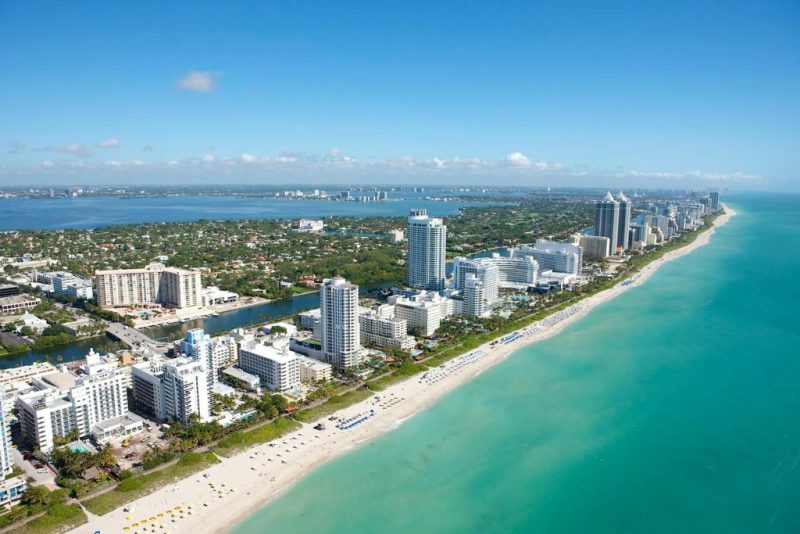
In the first post of my series, I thought it would be a great start to introduce Florida. Having visited this beautiful state many times as a tourist and now living here for over two years, I’ve experienced life both as a resident and from the perspective of a Realtor. I will continue to share my experiences from these two viewpoints. If my insights provide value to those who are curious, that would be my greatest joy.
Located in the southeastern United States, Florida is not just a state but also a lifestyle.
Wherever you look, you’ll see a blend of green and blue, with different types of trees, flowers, lakes, and endless beaches. You’ll hear the calls of tropical birds everywhere and experience geese walking alongside you during your morning strolls. You might even witness an iguana climbing the trees in your backyard, only to dive into a lake at the slightest movement. Jumping fish, turtles popping their heads out of the water, ducklings hatching before your eyes, and their first swim within a week—it’s all part of daily life here. Let’s not even mention the countless lizards, which are as common as ants. Simply put, this is a natural wonderland where people and nature coexist in harmony. You might be in the heart of the city, but your backyard could feel like a slice of paradise.
With its breathtaking beauty, tropical climate, miles of coastline, and strong economy, Florida continues to attract millions of people, offering both lifestyle and investment opportunities.
Now, let’s move forward by sharing some general information about Florida that I’ve gathered through my research.
Geography and Topography: A Sunny Paradise

Florida, covering an area of 170,312 square kilometers, is the 22nd largest state in the United States. Stretching along the Atlantic Ocean and the Gulf of Mexico, Florida has 1,350 miles (2,173 km) of coastline, making it a haven for ocean enthusiasts and nature lovers alike. Its diverse geography ranges from lush forests in the north to the famous Everglades National Park in the south, offering something for everyone.
Florida is geographically divided into the following regions:
- North Florida: A more rural area that includes the state capital, Tallahassee.
- Central Florida: Known for its vibrant economy, this region is home to cities like Orlando and Tampa, popular for their theme parks and tourism.
- South Florida: Includes cosmopolitan cities like Miami and Fort Lauderdale, where the influence of Latin America is strongly felt.
Notable Cities:
• North Florida: Tallahassee, Jacksonville
• Central Florida: Orlando, Tampa
• South Florida: Miami, Fort Lauderdale, Boca Raton
• Florida Keys: Key West
Climate and Lifestyle

Known as the “Sunshine State,” Florida has a humid subtropical climate in the north and a tropical climate in the south. The state enjoys mild weather year-round, with average temperatures of 28°C in the summer and 16°C in the winter. This makes Florida appealing both to those seeking a year-round vacation and to people looking to settle down permanently.
| Season | Average Temp (°C) | Rainfall (mm) | Humidity (%) |
| Winter | 10-21 | 50-100 | 60-70 |
| Spring | 14-25 | 75-150 | 65-75 |
| Summer | 23-32 | 150-200 | 70-85 |
| Fall | 19-29 | 100-150 | 65-80 |
Demographics: A Diverse Community
With a population of approximately 22 million as of 2023, Florida is the third most populous state in the U.S. The average age is 42.4 years, and while the state is popular among retirees, it also hosts a young, dynamic workforce.
Florida’s population is notably diverse. Approximately 21% of the population is foreign-born, and in 30% of households, a language other than English is spoken. This cultural richness shapes the state’s social and cultural fabric, making Florida a melting pot of traditions and perspectives.
Ethnic Composition:
- White: 52%
- Black or African American: 14.9%
- Hispanic: 11.9%
- Other: 21.2%
In South Florida, the demographic breakdown by county is as follows:
| County | Total Population | Women (%) | Men (%) | Density (per km²) |
| Miami-Dade | 2,716,940 | 51.4 | 48.6 | 1,350 |
| Broward | 1,944,375 | 51.3 | 48.7 | 1,500 |
| Palm Beach | 1,496,770 | 51.5 | 48.5 | 700 |
Ethnic Distribution by County:
| County | White (%) | Black or African American (%) | Other Ethnic Groups (%) |
| Miami-Dade | 15.4 | 17.1 | 67.5 |
| Broward | 33.1 | 30.1 | 36.8 |
| Palm Beach | 53.5 | 19.7 | 26.8 |
Government Structure
To better understand future discussions, let’s briefly touch on Florida’s administrative structure. The United States is a federal republic composed of 50 states, each of which has its own constitution and laws, granting a level of autonomy. Florida is governed under its own constitution, with executive, legislative, and judicial branches. The governor heads the executive branch, while the legislative branch consists of a bicameral system: the Florida Senate and the House of Representatives.
Florida is divided into 67 counties, which you can think of as regions containing multiple cities. Each county has its own local government responsible for delivering certain public services.
Cities, towns, and villages within these counties also have their own municipal governments, offering services and setting local regulations. Florida’s administrative structure mirrors the broader local government system in the U.S., though specific features may vary depending on the state’s unique history and culture.
Economy: A Strong and Diverse Market
Florida boasts one of the largest economies in the world, with a GDP of $1.4 trillion as of 2023. Key industries such as tourism, agriculture, healthcare, and construction form vital components of the state’s economic structure.
According to the latest data from the U.S. Census Bureau, Florida’s median household income increased by 3.1% in 2022, reaching $73,311. The state’s low tax rates and business-friendly policies continue to foster economic growth.
When discussing the overall economic structure, it’s worth briefly mentioning the impact of the recent presidential elections. The victory of Donald Trump in the U.S. Presidential Election is expected to have various effects on Florida’s economy, just as it will across the country. However, there is some uncertainty about how these economic policies will take shape and how they will reflect on Florida’s economy.
Trump’s economic policies, particularly tax cuts, trade policies, and his stance on immigration, will shape the state’s economic dynamics. Following the election, consumer confidence in Florida has shown a positive shift. According to research by the University of Michigan, the consumer confidence index among Republican households increased by more than 15 points last month. This rise could signal more confidence in making significant purchases and investments.
Trump’s plans to increase import taxes pose a potential risk to Florida’s trade-dependent economy. At the same time, proposed tax cuts and incentives are expected to support economic growth for businesses and individuals in Florida. However, there is skepticism about the feasibility of promises such as reducing mortgage interest rates. Bloomberg’s analysis highlights the challenges of bringing mortgage rates down to 3%.
After remaining relatively steady, the Florida real estate market has seen increased activity following the election. In particular, regions like Palm Beach have experienced growing interest from business people and politicians, leading to a rise in property demand and prices in certain areas. This could have positive impacts on the local economy.
In summary, the economic impacts of the 2024 elections on Florida are expected to be multifaceted. Factors such as federal budget policies, interest rates, and demographic changes will shape the state’s economic dynamics. While positive developments like increased investment and job growth are anticipated, changes in healthcare and trade policies will also require close monitoring.
Florida’s Key Industries
In this beautiful state, several key industries play a significant role in shaping the economy:
- Tourism: Florida is home to some of the most iconic attractions in the world, drawing over 130 million tourists annually.
- Agriculture: As a natural paradise, Florida produces over 70% of the citrus fruits consumed in the United States, playing a critical role in the nation’s agriculture.
- Healthcare and Biotechnology: These sectors have rapidly grown in recent years, establishing Florida as an innovation hub in these fields.
- Real Estate: Florida’s real estate market is essential to its economy, offering investment opportunities for both local and global buyers.
An Overview of Housing Costs in South Florida
Before concluding this post, I’d like to address a question that often arises, which will also form the foundation of my next research article, where I’ll discuss the types and characteristics of homes in South Florida:
“If I want to buy a house, what would it cost me?”
This is a general evaluation because housing prices in Florida vary greatly depending on the region and property type. Each option comes with its own set of advantages and disadvantages, and it’s crucial to assess these carefully while considering criteria that align with your expectations to make the right move with confidence.
I’ve gathered data from various sources to create a table summarizing average home prices, minimum and maximum sale prices, and cost per square foot for Florida’s northern, central, and southern regions in 2024. However, as I mentioned earlier, this is a general overview. Conducting more specific and customized research will be a healthier approach for obtaining the most accurate and up-to-date information.
| Region | Avg Home Price* | Min Price | Max Price | Cost per Sq Ft* |
| North Florida | $300,000-$350,000 | $150,000 | $750,000 | $150-$175 |
| Central Florida | $350,000-$400,000 | $200,000 | $900,000 | $175-$200 |
| South Florida | $400,000-$1,000,000 | $200,000 | $5,000,000+ | $250-$500+ |
- Additional costs (e.g., closing costs, insurance, taxes) are not included in the sale price.
- Square footage is measured in “sq ft,” a commonly used unit in the U.S. (1 sq ft = 0.092903 m²).
| County | Avg Home Price* | Min Price | Max Price* | Cost per Sq Ft* |
| Miami-Dade | $500,000-$1,500,000 | $250,000 | $5,000,000+ | $620-$670+ |
| Broward | $400,000-$1,200,000 | $200,000 | $4,000,000+ | $510-$560+ |
| Palm Beach | $450,000-$1,300,000 | $220,000 | $4,500,000+ | $560-$600+ |
- Calculations are based on typical real estate transactions and exclude ultra-luxury sales.
- The “+” symbol indicates that prices may exceed the stated range.
- Miami, in particular, is a preferred destination for luxury real estate investments, accounting for 26% of the market.
Conclusion: The First Step in Exploring Florida
This general overview of Florida’s unique geography, demographic diversity, and economic dynamics serves as the first step in getting to know the opportunities this sunny state offers. When stepping into the world of real estate, we must remember that every detail has a story, and every story holds an opportunity.
But our journey doesn’t end here! In the upcoming articles, I’ll dive into market trends over recent years, explore different property types, and provide detailed insights into the home-buying process in Florida. I’ll also evaluate why Florida remains such an attractive destination for investors and cover the basic principles of how the real estate market operates.
Are you ready to uncover the secrets of Florida’s real estate world? Let’s discover them together!
May your life always be filled with sunshine.
References:
National Association of Realtors (NAR). Real Estate Market Data and Trends.
U.S. Census Bureau. Population and Housing Statistics.
Florida Department of Economic Opportunity. Economic Overview and Employment Data.
Florida Realtors. State and Regional Housing Market Reports.
Zillow Research. Real Estate Market Insights for Florida.
Redfin. Housing Market Data and Trends.
Palm Beach County Government. County Development and Real Estate Statistics.
Broward County Government. Community and Housing Reports.
Federal Reserve Bank of St. Louis (FRED). Economic Data on Housing and Mortgages.
Realtor.com Research. Market Trends and Analysis for South Florida.
New York Post. “Home Prices Just Dropped Significantly in These 3 Cities: Report.” Published September 9, 2024.
Realtor.com. “Florida Housing Market: Condos, Home Prices, Coastal vs. Inland Trends
The Times. “Brickell, the New Miami Property Hotspot.”
News from Reuters and Bloomberg (2024)
- Reuters. Trump earns big from Florida golf resorts.
- Reuters. Trump’s federal budget cuts impact on Republican states.
- Bloomberg. Trump’s promise of 3% mortgage rates.
Find Your Dream Nest
© 2025 NazNest Real Estate Consultancy. All rights reserved. Privacy Policy
